


Able to withstand hot climates, ice and snow, fast charging, and low cost, such a "powerful" lithium battery really exists! Recently, a new lithium-ion battery technology developed by the team of researcher Tang Yongbing of the Carbon Neutrality (Preparatory) Institute of the Shenzhen Institute of Advanced Technology, Chinese Academy of Sciences, has completed large-scale mass production. Statistics show that the qualified rate of this large-scale mass production product reached 99.11%, and the qualified rate of each process was above 99%.
Shenzhen Institute of Advanced Technology successfully mass-produced new lithium-ion batteries
The expert team said that this is my country's first battery cell product with a wide temperature range, low cost and long life, which is expected to break the battery industry pattern.
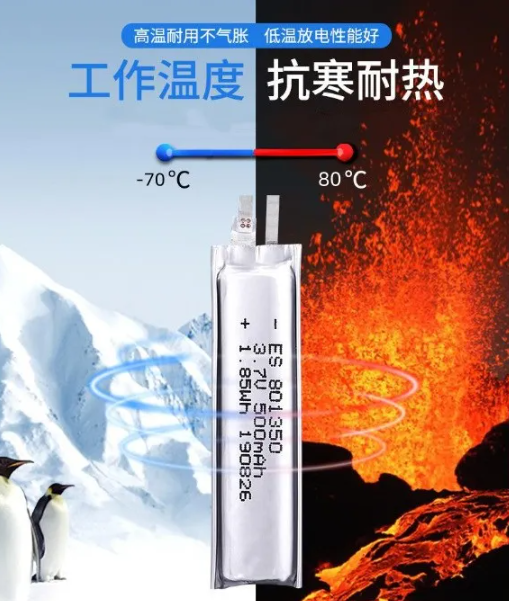
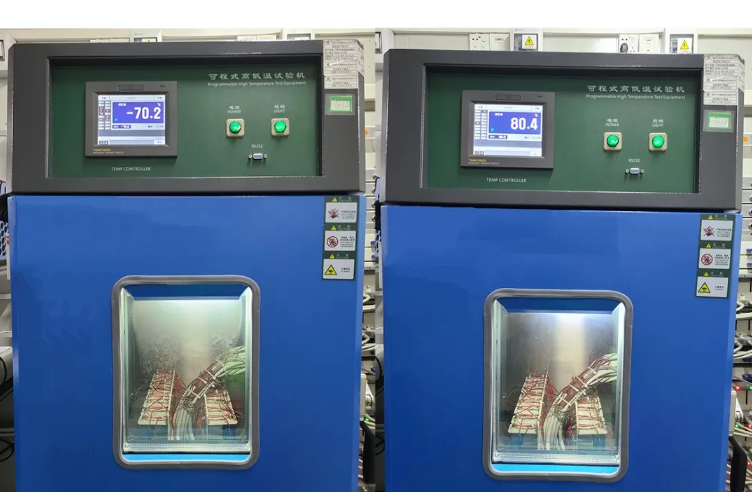
The biggest feature of this technology is that the battery can be used normally in the temperature range of -70℃ to 80℃ and can adapt to ambient temperature differences "spanning" 150℃.
Therefore, the research team developed a new aluminum-based composite negative electrode material. By matching it with commercial lithium-ion battery positive electrode materials, they successfully developed new lithium manganese oxide, lithium iron phosphate and ternary batteries and other products for different application scenarios.
Adapt to the ambient temperature difference "across" 150℃
From cars to electronic products, lithium-ion batteries have long penetrated into people's lives, providing "power" for food, clothing, housing and transportation. According to the "2021 China Lithium Battery Industry Development Index White Paper" recently released by the China Academy of Information and Communications Technology of the Ministry of Industry and Information Technology, my country has become the world's largest lithium battery consumer market for five consecutive years.
However, due to the limitations of key battery materials, a major limitation of lithium-ion batteries is that they cannot be charged under low temperature conditions below zero, and safety cannot be guaranteed under high temperature conditions above 50°C. my country has a vast territory, and the temperature varies greatly with the region and season. The winter temperature in the north can be as low as -40°C, while the summer surface temperature in the south is as high as 50°C. Electric vehicles cannot start in winter, smartphones automatically shut down, and electric vehicles catch fire in summer. For this reason, the team of researcher Tang Yongbing has spent nearly 10 years developing a new lithium-ion battery technology that is both frost-resistant and heat-resistant. The lowest operating temperature can reach -70°C, and the highest operating temperature is as high as 80°C, and low and high temperature performance can be taken into account at the same time.
It is reported that the product's high and low temperature performance, cycle life, safety performance and other indicators have passed the testing of third-party authoritative organizations, and obtained ISO9001, GB31241-2014, IEC 62133-2:2017, UN38.3 and other standards and qualification certifications.
Research and development of key negative electrode materials
What is the "new" of the new battery? The team mainly focuses on negative electrode materials and electrolytes.
It is understood that the current technology related to the positive electrode materials of batteries has reached the "ceiling". To improve performance, there is still room for the development of negative electrode materials. To this end, the team has developed a new aluminum-based composite negative electrode material. By matching it with commercial lithium-ion battery positive electrode materials, it has successfully developed new lithium manganese oxide, lithium iron phosphate and ternary batteries for different application scenarios. "In addition to the characteristics of heat and frost resistance, the battery products we developed also have the advantages of high safety, long battery life, fast charging and low cost." The team said. In terms of safety performance, conventional lithium batteries will produce lithium dendrites inside as they are used continuously, which will not only affect the charging capacity, but may also pierce the diaphragm and bring hidden dangers such as battery short circuit. The new aluminum-based negative electrode developed by the team can effectively alleviate the generation of lithium dendrites under low temperature and overcharge conditions, thereby improving safety. In terms of battery life performance, thanks to the high theoretical capacity of aluminum-based negative electrode materials, the energy density of the battery is increased by 13% to 25% compared with traditional lithium-ion batteries, and can achieve long battery life. In addition, due to the excellent conductivity of the aluminum-based composite negative electrode, the product also exhibits excellent fast charging performance, which can be fully charged in 20 minutes, providing a solution for the half-hour charging demand.
In terms of cost, based on the performance advantages of the aluminum-based composite negative electrode and combined with the developed high-performance electrolyte, low-temperature battery products can get rid of the dependence on expensive nano-scale positive electrode materials, and the battery cost can be reduced by 10%-30%.
Application scenarios "in the sky and on the ground"
It is reported that this mass production is in response to the requirements of an electric vehicle customer, and a batch of battery cells are provided for in-depth performance evaluation. The relevant performance evaluation has met the use requirements.
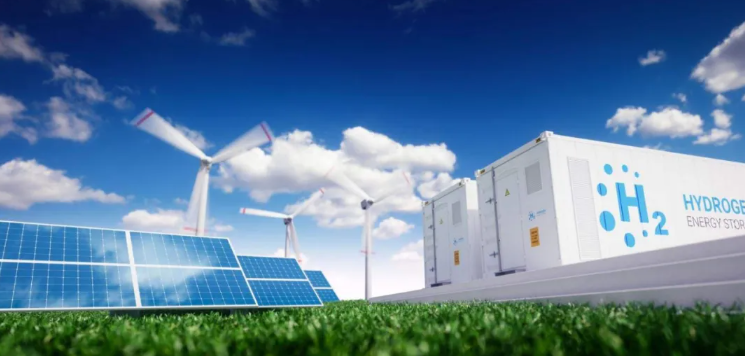
In fact, keeping close to market demand is what the team has always insisted on. "Some scenarios require normal charging and discharging at minus 40 degrees Celsius, while others have higher requirements for long cycles. Focusing on core technologies and combining actual conditions, we continue to adjust our products." The team said. Related products can be applied to photovoltaic energy storage, household energy storage, communication base station energy storage, rail transportation, aerospace, polar scientific research and other fields, especially suitable for high-cold and subtropical areas, which significantly expands the application range of batteries.
It is reported that the relevant research results have been published in more than 90 high-level SCI papers (more than 60 papers with impact factor > 10) in international journals such as Nature Chemistry, Nature Communications, and Advanced Materials. At the same time, a systematic and comprehensive intellectual property layout has been carried out around the relevant technologies, forming a patent pool of more than 180 patents including PCT patents, Chinese invention patents, and patents in the United States, Europe, Japan and South Korea, and more than 120 authorized patents have been obtained.
In addition, according to Wu Xiaoli, director of the Transformation Department of Shenzhen Advanced Institute, based on the new battery technology, the team's 23 related patents rely on Shenzhen Advanced Institute, with intellectual property valued at 65 million yuan, and successfully achieved technology transfer and transformation. In March 2017, Shenzhen Zhongke Ruineng Industrial Co., Ltd. (referred to as "Zhongke Ruineng") was established, with a cash investment of 25 million yuan and a registered capital of 100 million yuan. At present, the project is negotiating capital increase and share expansion, further building a large-scale production line for new batteries, and rapidly promoting the application of new battery products in various fields.
In short, the era of new energy has arrived, and we need to achieve more technological accumulation and breakthroughs in the field of batteries. Because not every laboratory research result, every paper in an academic journal, can go to the market and become a commercial product, but we cannot stop doing scientific research just because we cannot achieve results transformation. This logic is wrong. So, let us hope that this new lithium battery technology and other scientific research results can be applied to a wider range earlier and faster.